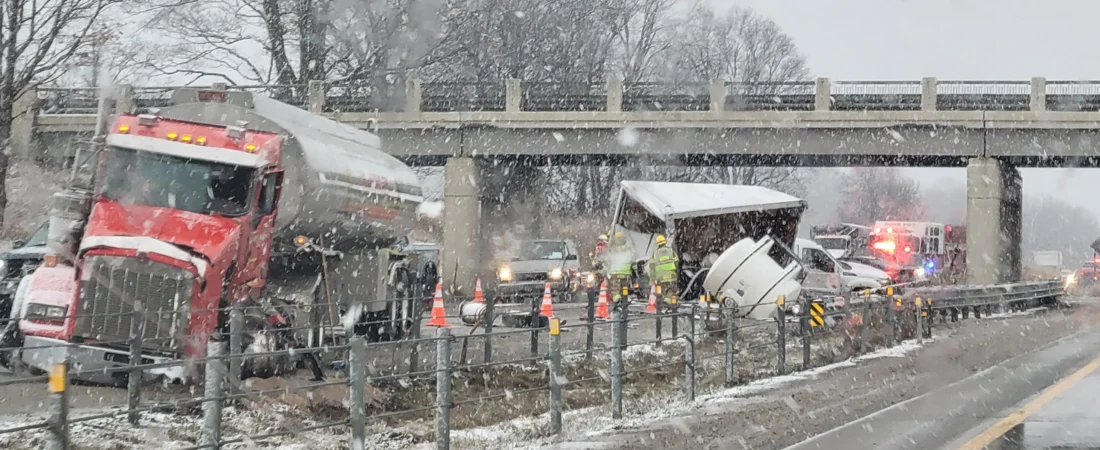
The steps you take in the minutes and hours after a truck accident can significantly affect your health, safety, and any future claim.
Check for injuries and call 911. Get medical attention moving first — for yourself and anyone else involved — before worrying about anything else.
Move to safety if possible. If your vehicle is drivable and it’s safe to do so, move it out of traffic to prevent a secondary collision.
Wait for police and get a report. A police report is one of the most important pieces of evidence in a truck accident claim; make sure an officer responds and files one.
Document the scene. Take photos and videos of vehicle damage, skid marks, road conditions, traffic signs, and any visible injuries before anything is moved or cleaned up.
Get the trucking information. Note the truck’s license plate, DOT number, company name, and driver’s name and license number — this information may disappear from the scene quickly.
Collect witness information. Names and phone numbers of anyone who saw the crash can be valuable if their account is needed later.
Avoid discussing fault at the scene. Stick to factual information with police and other drivers; don’t speculate about who was at fault or apologize in a way that could be misconstrued.
Seek medical care even if you feel okay. Some injuries, especially soft tissue and head injuries, don’t show symptoms immediately — a prompt medical evaluation also creates a documented record tying your injuries to the crash.
Avoid giving a recorded statement to the trucking company’s insurer before speaking with an attorney, since these statements are often used to minimize claims.
Contact an attorney early. Trucking companies frequently send investigators to the scene within hours; having your own representation early helps level the playing field.
The steps you take in the minutes and hours after a truck accident can significantly affect your health, safety, and any future claim.
Check for injuries and call 911. Get medical attention moving first — for yourself and anyone else involved — before worrying about anything else.
Move to safety if possible. If your vehicle is drivable and it’s safe to do so, move it out of traffic to prevent a secondary collision.
Wait for police and get a report. A police report is one of the most important pieces of evidence in a truck accident claim; make sure an officer responds and files one.
Document the scene. Take photos and videos of vehicle damage, skid marks, road conditions, traffic signs, and any visible injuries before anything is moved or cleaned up.
Get the trucking information. Note the truck’s license plate, DOT number, company name, and driver’s name and license number — this information may disappear from the scene quickly.
Collect witness information. Names and phone numbers of anyone who saw the crash can be valuable if their account is needed later.
Avoid discussing fault at the scene. Stick to factual information with police and other drivers; don’t speculate about who was at fault or apologize in a way that could be misconstrued.
Seek medical care even if you feel okay. Some injuries, especially soft tissue and head injuries, don’t show symptoms immediately — a prompt medical evaluation also creates a documented record tying your injuries to the crash.
Avoid giving a recorded statement to the trucking company’s insurer before speaking with an attorney, since these statements are often used to minimize claims.
Contact an attorney early. Trucking companies frequently send investigators to the scene within hours; having your own representation early helps level the playing