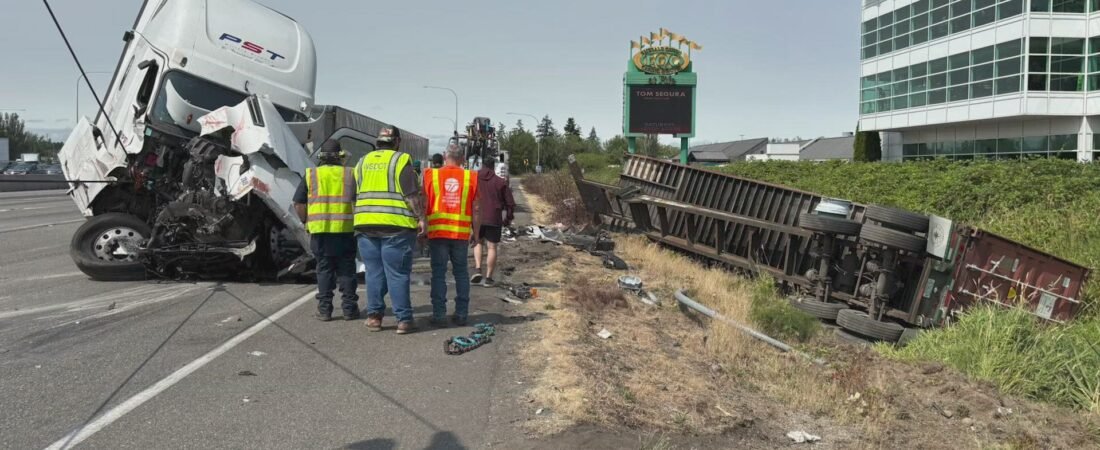
There’s no single formula that produces a truck accident settlement number, but attorneys and insurance companies generally work through a similar set of factors to arrive at a figure both sides can agree on — or, if they can’t agree, that a jury eventually decides. Understanding this process can help you make sense of an offer you receive and recognize whether it reflects the actual value of your claim.
Step One: Totaling Economic Damages
The calculation typically starts with economic damages — the concrete, documentable costs tied to the accident. This includes medical bills incurred to date, estimated costs of future medical care, lost wages during recovery, and any reduction in future earning capacity if your injuries have long-term effects on your ability to work. These figures are usually the most straightforward to establish, since they’re backed by bills, pay stubs, and expert projections, and they form the baseline that everything else builds on.
Step Two: Valuing Non-Economic Damages
Non-economic damages — pain and suffering, emotional distress, loss of enjoyment of life — are harder to attach a dollar figure to, so a couple of common methods are used to estimate them.
The multiplier method takes the total economic damages and multiplies them by a factor, often somewhere between 1.5 and 5, depending on the severity and permanence of the injury. A relatively minor, fully-healed injury might use a lower multiplier, while a catastrophic or permanent injury could justify a multiplier at the higher end of that range.
The per-diem method instead assigns a daily dollar value — sometimes based on the injured person’s daily earnings — for every day between the accident and maximum medical recovery, reflecting the ongoing impact of the injury day by day.
Neither method is required by law, and insurers often use their own internal formulas that may not be transparent, which is part of why having an attorney review an offer against these more standard approaches can reveal whether a number seems reasonable or artificially low.
Factors That Move the Number Up or Down
Severity and permanence of injuries matter more than almost anything else. A catastrophic injury — spinal cord damage, traumatic brain injury, amputation — will generally result in a dramatically higher valuation than an injury that fully resolves within a few months, because the future costs and lifestyle impact are so much greater.
Comparative fault can significantly reduce the total. If you’re found partially responsible for the accident, most states reduce your compensation by your percentage of fault. This makes clear liability evidence — police reports, witness statements, electronic logging data — especially valuable, since even a modest shift in assigned fault percentage can change the final number substantially.
Available insurance coverage sets a practical ceiling on recovery. Even a well-documented, high-value claim may ultimately be limited by the at-fault party’s policy limits. This is one reason identifying every potentially liable party in a truck accident matters — the driver, the trucking company, a cargo loader, or a parts manufacturer may each carry separate insurance, and multiple policies can sometimes apply to a single accident.
The strength of your liability evidence affects negotiating leverage. A claim built on clear, well-documented evidence gives your attorney far more leverage to negotiate near the top of a reasonable settlement range, since the insurer has less room to dispute what happened.
Local jury verdict trends often factor into negotiations, even in cases that never go to trial. Both sides tend to reference how juries in your jurisdiction have historically valued similar injuries, since that outcome is the implicit alternative if a settlement can’t be reached.
Your credibility and documentation play a role too. Consistent medical treatment, a clear written record of how the injury has affected your daily life, and cooperative communication with your legal team all strengthen a claim, while gaps in treatment or inconsistencies can be used by an insurer to argue your injuries weren’t as serious as claimed.
Why This Process Benefits From Experience
Because these calculations ultimately involve judgment calls on both sides — how severe is severe enough for a higher multiplier, how much weight should a particular piece of evidence carry — settlement negotiations function as much as a negotiation as a strict math problem. An insurance adjuster negotiates these cases regularly and has a financial incentive to settle low. Having an attorney who understands both the formal calculation methods and the practical negotiating dynamics specific to truck accident cases can make a measurable difference in where the final number lands.