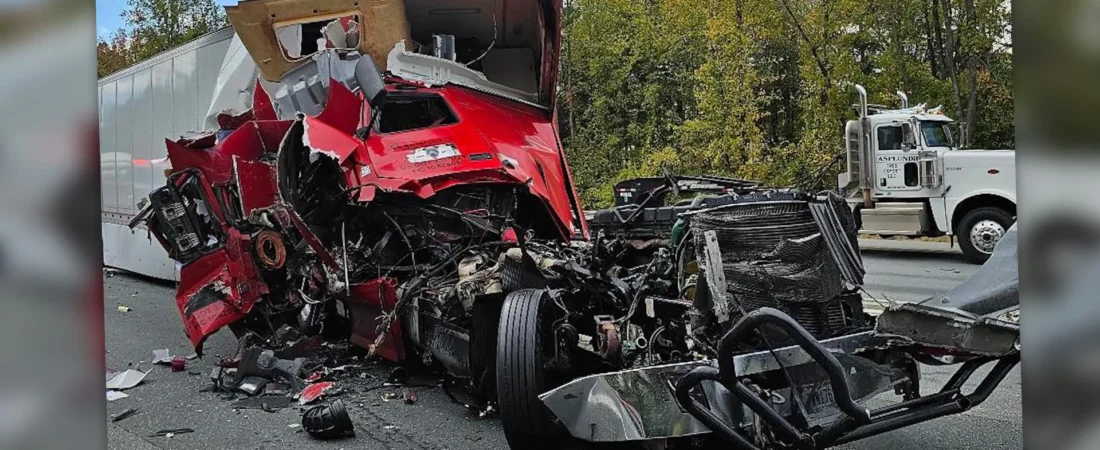
Truck accident claims typically take longer to resolve than standard car accident claims, and understanding why can help set realistic expectations during what’s often an already stressful and financially difficult time. While every case is different, a few consistent factors tend to drive how long the process takes from start to finish.
Simple Cases Can Move Relatively Quickly
Claims with clear liability and minor, fully-healed injuries may resolve in a few months. When fault isn’t seriously disputed and the injured party has completed treatment with a clear, well-documented recovery, negotiation with the insurer can sometimes move fairly efficiently, especially if both sides are motivated to avoid the time and expense of litigation.
Serious Injury Cases Take Considerably Longer
Cases involving significant injuries often take a year or more to resolve. This isn’t typically due to inefficiency — it’s usually a deliberate choice. Attorneys generally wait until a client has reached “maximum medical improvement” (the point at which a doctor determines the condition has stabilized and is unlikely to improve further) before pursuing a settlement, so the full extent of damages, including future medical needs, can be accurately valued. Settling too early risks leaving significant compensation on the table for costs that hadn’t yet become apparent.
Why Truck Accidents Specifically Take Longer
Multiple liable parties add real complexity and time. Unlike a typical two-car accident, truck accidents often involve several potentially responsible parties — the driver, the trucking company, possibly a cargo loading company or a parts manufacturer — each of which may be covered by a separate insurance policy. Coordinating claims, investigations, and negotiations across multiple insurers naturally extends the overall timeline compared to dealing with a single insurance company.
Investigation and evidence gathering take real time upfront. Truck accident cases often require specialized evidence not present in ordinary car accidents: electronic logging device data, driver qualification files, maintenance and inspection records, and sometimes accident reconstruction analysis. Some of this evidence must be formally requested — and in certain cases, protected through legal action to prevent it from being lost or destroyed — before it can even be reviewed.
Litigation, if necessary, extends the timeline significantly. If a fair settlement can’t be reached through negotiation, filing a lawsuit typically adds substantial time to the process. This includes the discovery phase (where both sides exchange evidence and take depositions), possible pretrial motions, and, in a smaller percentage of cases, an eventual trial. Even cases that ultimately settle sometimes do so only after a lawsuit has been filed, once both sides have a clearer picture of the evidence.
Insurance company tactics can add unnecessary delay. Some insurers use delay as a deliberate strategy, hoping that financial pressure or simple fatigue will push claimants toward accepting a lower settlement than they’d otherwise be willing to consider. This can show up as slow responses, repeated requests for documentation already provided, or unexplained gaps in communication.
What You Can Control
Completing recommended medical treatment consistently helps keep your case moving and strengthens the documentation behind your claim. Gaps in treatment can both slow down your case and give an insurer a reason to argue your injuries weren’t as serious as claimed.
Responding promptly to requests from your attorney — whether for documents, medical updates, or other information — helps avoid unnecessary delays on your end of the process.
Staying patient during the investigation phase, even when it feels slow, is often in your own best interest. A thorough investigation typically results in a stronger, more accurately valued claim than one rushed to a quick resolution.
The Trade-Off Between Speed and Value
It’s natural to want a fast resolution, particularly when medical bills are accumulating and income has been disrupted. But settling too early — before the full scope of your injuries, future medical needs, and other damages is properly understood — often means permanently giving up compensation that can’t be recovered later, since settlements are typically final. Many attorneys will work to balance these competing pressures, sometimes by seeking interim solutions like medical liens or coordinating with health insurance to manage costs while the claim itself is still being properly built and valued. If you’re feeling financial pressure to settle quickly, it’s worth discussing these options with your attorney rather than accepting an early offer out of necessity alone.